Back to Blogs
Discover specialized software to review security footage at your treatment center. Learn how AI improves safety, compliance, and incident documentation affordably.
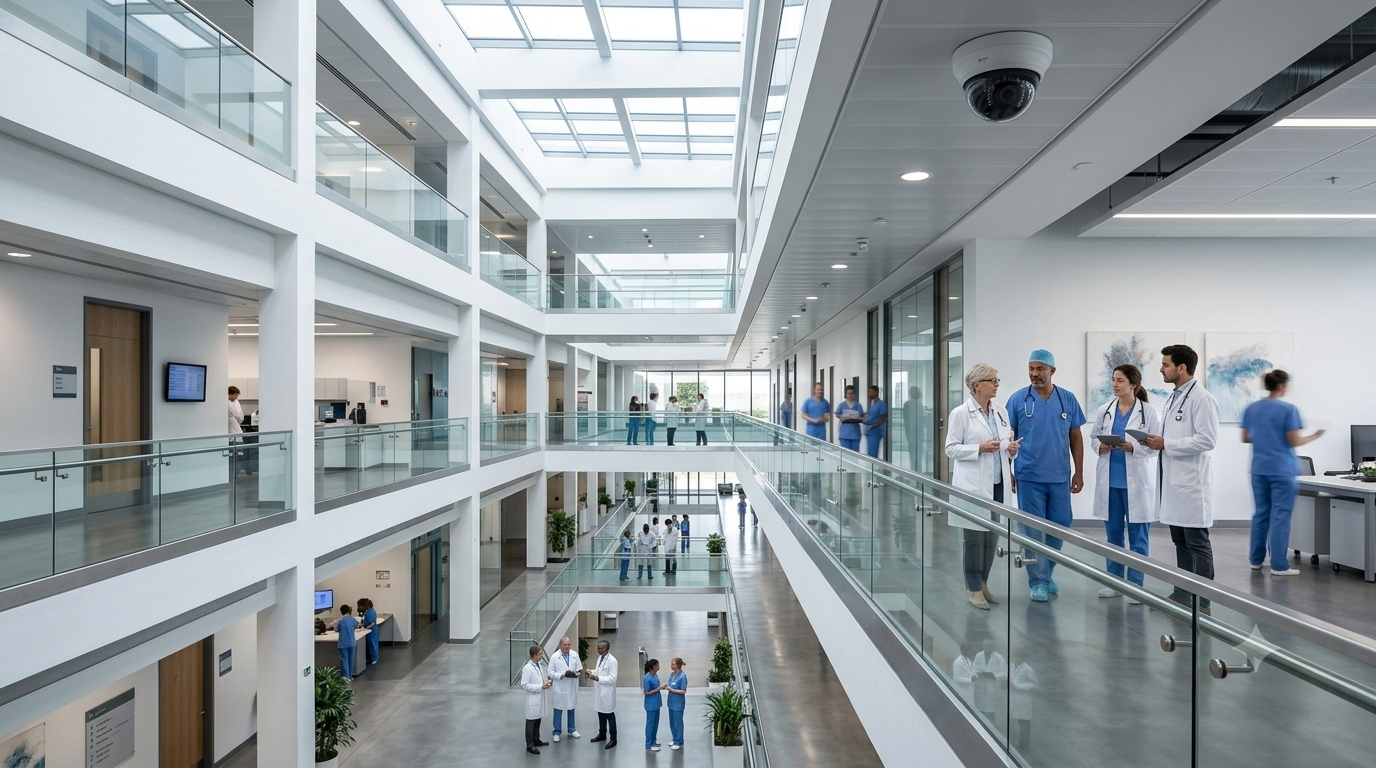
Behavioral health centers, addiction treatment facilities, and rehabilitation clinics operate in environments where every incident matters and documentation cannot wait. When a patient elopement attempt occurs or a staff safety event unfolds, reviewing footage quickly is not optional. Modern hybrid edge-and-cloud platforms connect directly to the cameras a facility already has installed, giving compliance officers and administrators access to innovative AI search, zone breach alerts, and structured incident documentation tools without purchasing new hardware or disrupting active patient care.
Behavioral health facilities face unique operational risks that standard retail or commercial security systems are not built to handle. Staff safety, patient elopement, and strict incident documentation require specialized tools.
When a physical altercation occurs in a common area or a vulnerable patient attempts to leave the facility unsupervised, staff cannot afford to waste hours manually clicking through passive video recordings. They need an active system that supports their safety protocols. Having specialized review software ensures that when an adverse event happens, compliance officers can immediately locate the objective truth of the situation. This rapid access to video evidence is crucial for internal reviews, state compliance reporting, and coordinating effectively with local first responders.
When evaluating new platforms, facilities managers should prioritize intuitive tools that reduce administrative burden for non-technical care staff.
Legacy recording systems notoriously require frustrating desktop application installations and manual IT upgrades. Modern review software must provide secure browser access, allowing authorized administrators to log into a web portal from any device.
Additionally, the software must offer customizable zone alerts for restricted areas and provide multi-building visibility. This unified view is essential for operators managing several different care units or outpatient clinics across a regional campus.
Investigating an incident manually drains valuable staff time that should be dedicated entirely to patient care and recovery programs. The addition of artificial intelligence transforms the documentation process into a rapid, structured workflow.
Innovative AI search allows compliance officers to type a description like a person in a blue shirt or a specific vehicle type to retrieve the exact video clip instantly. This accelerated retrieval ensures that administrators can assemble clear, timestamped evidence for incident reports and insurance claims in seconds rather than hours. By retrieving accurate footage quickly, treatment centers protect their staff from false claims and ensure that all state-mandated reporting requirements are met with precise documentation.
Active zone monitoring is a critical feature for addiction treatment facilities and mental health clinics that manage controlled substances and secure environments.
Administrators can establish digital boundaries around medication rooms, pharmacy dispensaries, or staff-only corridors. If an unauthorized individual attempts to access these restricted zones, the software sends an instant alert to the facility manager.
Furthermore, this technology plays a vital role in elopement prevention. By configuring perimeter monitoring around exit doors, exterior courtyards, and fence lines, the system will flag when a patient approaches a vulnerable exit point. This proactive notification allows care staff to intervene gently and maintain a safe, secure therapeutic environment.
Protecting patient dignity is paramount in any behavioral health setting. Security tools are meant to protect the therapeutic environment, not intrude upon it.
Camera placement must be strictly limited to public common areas, main hallways, dining facilities, and exterior perimeters. Security cameras must never be installed in patient rooms, private therapy offices, or restrooms. Because healthcare privacy laws are complex and vary significantly by state, administrators must consult with their legal counsel to confirm all local, state, and federal regulations regarding video monitoring and patient data before deploying any new technology.
For behavioral health and rehabilitation facilities specifically, there are additional compliance signals worth evaluating when selecting a platform. HIPAA governs how protected health information is stored, accessed, and transmitted. While video footage does not always constitute protected health information directly, any platform used in a healthcare-adjacent environment should support HIPAA-aligned data handling practices. Ask your vendor how footage is encrypted, who can access it, and how access is controlled.
Audit logs are a critical feature for treatment centers. A compliant platform should maintain a detailed log of every user who accessed footage, when they accessed it, and what actions they took. This creates an auditable record that protects the facility in regulatory reviews and legal proceedings.
Finally, SOC 2 certification is a meaningful signal that a software vendor has undergone an independent audit of their security controls. Confirming whether your platform vendor holds SOC 2 Type II certification is a reasonable due diligence step before signing a contract.
Upgrading your review software does not mean you have to replace the cameras your facility already owns. The most cost-effective platforms utilize a retrofit approach.
Modern intelligent systems connect directly to your existing IP cameras using the universal ONVIF standard. You simply install a localized edge appliance, which acts as the new processing hub for your current network. This retrofit approach preserves your initial hardware investment. Most importantly, it avoids the massive operational disruption of having construction crews pulling new cables and mounting new hardware throughout an active, sensitive care environment.
Because the retrofit approach reuses your existing camera lenses, the required capital expenditure is kept manageable for budget-conscious treatment centers.
Facilities make a single one-time hardware investment for the edge recording appliance. Following that purchase, the clinic pays a predictable monthly software subscription for each connected camera. This subscription covers the secure cloud dashboard access and continuous platform updates. Flexible financing is also widely available, helping private rehabilitation centers and nonprofit mental health clinics manage widespread technology upgrades without straining their operational budgets or depleting their vital grant funding.
What software can review security footage at a treatment center?
The most effective software relies on hybrid edge and cloud platforms that connect to your facility's existing cameras. These systems use a secure web-based dashboard to provide advanced search capabilities, proactive zone alerts, and streamlined incident reporting for compliance teams.
How does AI speed up footage review for incident documentation?
Innovative AI search indexes objects and people within the video feed. Instead of watching hours of recordings to find a specific event, compliance officers can use descriptive search terms to instantly retrieve the exact moments needed for official incident reports and insurance claims.
Can AI cameras monitor exit doors to prevent patient elopement?
Yes. Facilities managers can configure digital zone breach alerts around exit doors, exterior gates, and vulnerable perimeters. The system will send an instant notification to staff if a patient approaches these areas, allowing for proactive intervention.
Is security camera software appropriate for use in treatment centers?
Yes, when deployed responsibly in common areas and exterior perimeters to support staff safety and incident documentation. Facilities must always consult their legal counsel to ensure camera placement and data storage comply with all applicable patient privacy laws. When evaluating platforms, ask about HIPAA-aligned data handling, audit log capabilities, and SOC 2 certification as part of your due diligence.
Does the software work with existing cameras at my facility?
Yes. Modern platforms use the universal ONVIF standard to connect an intelligent edge appliance to your current IP cameras. This allows treatment centers to gain advanced analytics without enduring the cost and disruption of a full hardware replacement.
How much does security footage review software cost for a treatment center?
Costs are kept manageable through a retrofit model. Treatment centers make a one-time purchase for the AI-NVR hardware appliance and then pay a predictable monthly software subscription per camera, with financing available for larger multi-building deployments.
Schedule a demo of our platform to see how LiveReach can improve security at your organization.
Request Demo