Back to Blogs
Auto dealerships face unique security challenges—from open lots to service disputes. Learn what today’s camera systems need to do, where coverage matters most, and mistakes to avoid.
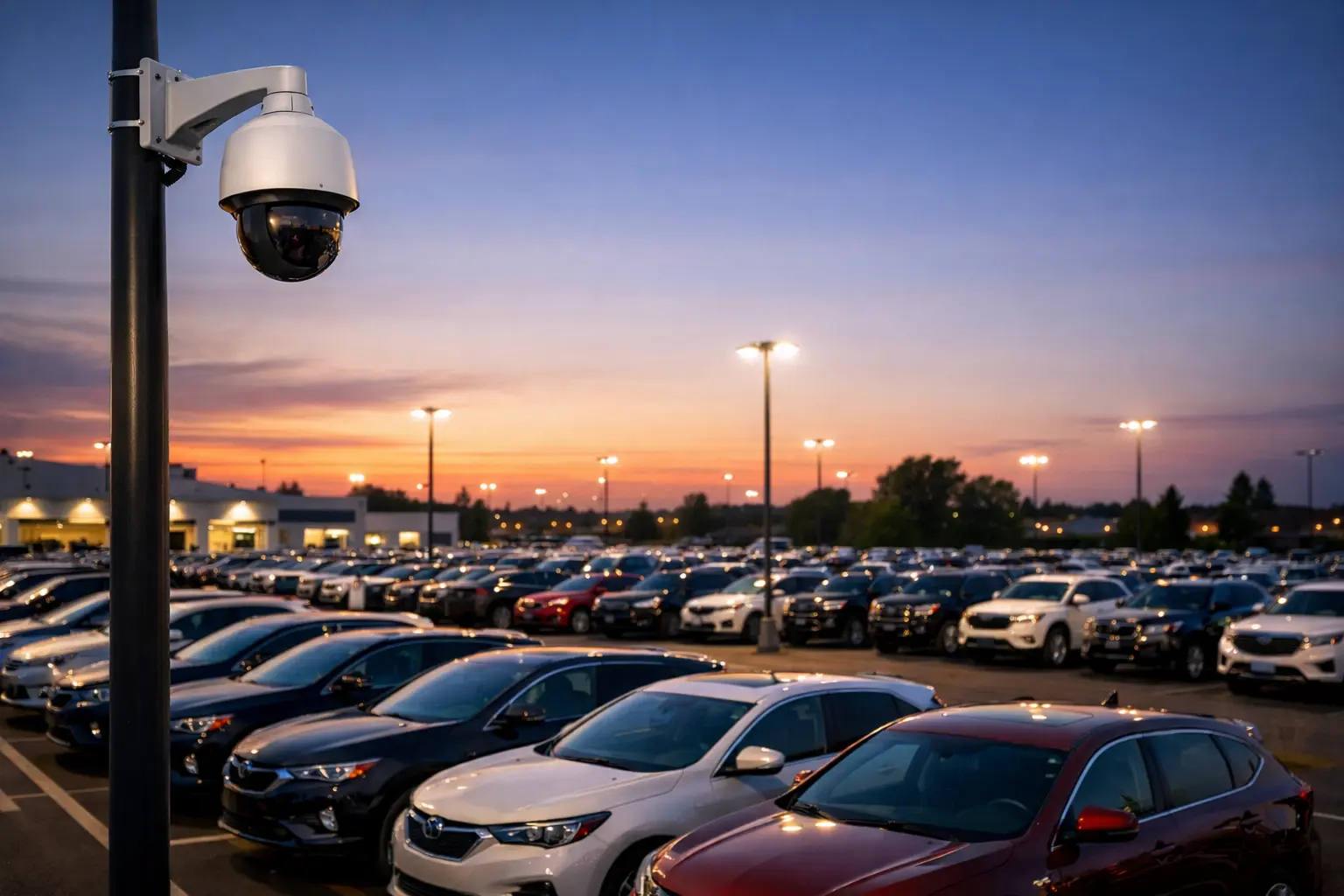
Auto dealerships manage some of the highest-value inventory in retail. Hundreds of vehicles sit outside overnight. Customers move freely across the lot during business hours. Service bays stay active long after the showroom closes.
When something goes wrong—vehicle damage, theft, disputes, or liability claims—basic video recording isn’t enough. Dealerships need clear visibility, fast answers, and reliable proof.
Modern security camera systems help dealerships protect inventory, reduce risk, and manage operations across sales lots, service areas, and multiple locations. This guide explains today’s dealership security needs, common mistakes to avoid, and the features that matter most.
Dealerships are very different from traditional retail spaces. Vehicles are constantly moving. Lots are large and exposed. Many incidents happen after hours.
Common challenges include:
Traditional camera systems often record footage, but fail when dealerships need quick answers to three basic questions: what happened, when did it happen, and which vehicle was involved.
Effective dealership security starts by covering the areas where risk and movement are highest.
Outdoor lots are prime targets for theft, vandalism, and damage claims. High-resolution cameras with wide coverage help document vehicle condition and monitor activity after hours.
Clear footage allows dealerships to:
Service departments generate frequent disputes over vehicle condition. Cameras in service lanes and bays provide visual records before and after work is performed.
This footage helps dealerships:
Test drives and customer parking introduce liability risk. Cameras help establish timelines and vehicle movement when questions arise.
Monitoring who enters and exits the property—especially after hours—helps detect unauthorized access and respond faster to incidents.
License plate recognition is one of the most valuable tools for dealerships.
LPR cameras automatically capture and log plate numbers as vehicles enter, move through, and exit the property. Instead of searching through hours of footage, staff can find video tied to a specific vehicle in seconds.
For dealerships, LPR enables:
When a customer claims damage happened “last week,” staff can search the plate number and immediately pull relevant footage.
Want a deeper look at how license plate cameras work in dealership environments?
Read our full guide on license plate recognition cameras, including use cases, camera placement tips, and what to look for in an LPR system.
Read the license plate cameras blog →
Many dealerships invest in cameras but still struggle when incidents occur. The problem usually isn’t the hardware. It’s how the system is planned and used.
Cameras that only record footage create a false sense of security. The video exists, but no one knows when something goes wrong.
Wide areas require careful placement. Cameras mounted too high, too low, or at the wrong angle often miss faces or license plates.
Low resolution, weak night performance, and motion blur make footage unusable when evidence is needed most.
Systems that require scrubbing through timelines across multiple cameras slow investigations and waste staff time.
Dealership groups often use different systems at each site, making centralized visibility and management difficult.
Dealerships need systems built for real-world operations, not basic surveillance.
Key features include:
Clear footage is critical for identifying vehicle condition, activity, and movement—especially at night.
The ability to search by vehicle, time range, or event dramatically reduces investigation time.
LPR turns vehicle movement into searchable data and speeds up claims resolution.
Groups need centralized access to all locations without relying on on-site staff or VPNs.
Dealerships should know immediately if a camera goes offline or recording stops—before footage is lost.
Systems should grow easily as lots expand or new locations are added.
Modern security platforms do more than prevent loss. They improve daily operations.
Dealerships use advanced camera systems to:
When video is paired with searchable data and alerts, cameras become operational tools—not just deterrents.
Want to see how video analytics turn footage into operational insight?
Explore how modern video analytics help dealerships monitor activity, spot issues faster, and turn cameras into everyday business tools.
Read the video analytics blog →
Traditional DVR systems struggle in dealership environments. They rely on analog recording, offer limited search capabilities, and often require on-site access to review footage. When incidents occur, manual timeline scrubbing and system downtime slow investigations and increase risk.
Modern network video recorder (NVR) systems solve these limitations by using IP cameras, centralized storage, and software-driven search. NVR platforms give dealerships faster access to footage, better reliability, and the flexibility to manage multiple locations from anywhere.
Compared to DVRs, modern NVR systems offer:
For dealerships managing high-value inventory across large outdoor lots and service areas, NVR systems provide the performance and visibility DVRs simply can’t. The operational and risk-reduction benefits quickly outweigh the cost of maintaining legacy DVR infrastructure.
Want a deeper breakdown of NVR vs. DVR systems?
Read our full guide comparing NVR and DVR security camera systems—including performance, and which setup works best for multi-location businesses.
LiveReach AI is built for businesses managing vehicles, people, and multiple locations. For dealerships, the platform combines:
By turning video into usable intelligence, LiveReach helps dealerships protect inventory, resolve disputes faster, and operate with confidence across every lot and service bay.
Security cameras should do more than record video. They should provide answers, reduce liability, and support daily operations.
The right system gives dealerships clear visibility—day and night—without slowing teams down or creating blind spots. When cameras are designed for how dealerships actually operate, they become a competitive advantage instead of a reactive tool.
Schedule a demo of our platform to see how LiveReach can improve security at your organization.
Request Demo